Invasive Alien Species in Kruger National Park: Biological control
Classical biological control has also been used as one of the KNPs invasive alien plant management tools. Host specific insects are collected from the country of origin of the invasive alien plant and tested under quarantine conditions to be specific to the host/ target alien plant, and, if successful, are approved for release by relevant the relevant experts. The introduction of the first biological control agent released in KNP, a snout weevil (Neohydronomus affinis), was for the control of water lettuce (Pistia stratiotes) at Dakamila Pan in the far northern Pafuri region in 1985, by the Agricultural Research Council’s Plant Protection Research Institute. This has led to the development of integrated control programmes in the KNP.
Since 1985, biological control agents have also been introduced into the KNP for the control of water hyacinth (Eichhornia crassipes), lantana (Lantana camara), sour prickly pear (Opuntia stricta), Kariba weed (Salvinia molesta) and red sesbania (Sesbania punicea). Much research has been done on the long-term post-release evaluation of these species, allowing a greater understanding of the insect-host interactions. This has largely been facilitated through collaboration between the KNP, the Plant Protection Research Institute, the University of Cape Town and Rhodes University. The KNP has developed a biological control rearing facility in Skukuza, primarily for rearing the cochineal insect (Dactylopius opuntiae) for the management of sour prickly pear, and aims to add biocontrol agents for aquatic weeds such as water hyacinth (Eichhornia crassipes).
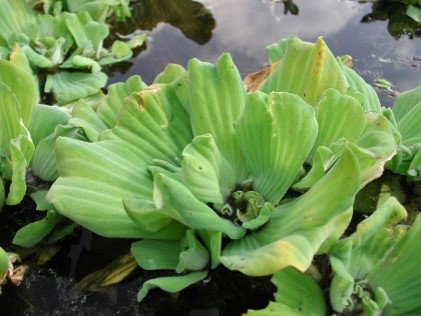
Water lettuce (Pistia stratiotes) underwent an interesting dynamic over a period of six years on Sunset Dam.
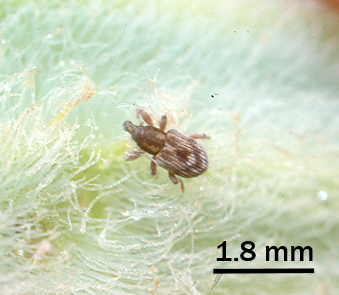
The biological control agent, Neohydronomus affinis, is a host specific weevil that feeds exclusively on water lettuce. The weevils were introduced to Sunset dam in an effort to find a long-term control method. © CJ Cilliers.

Sunset dam near Lower Sabie camp, invaded by water lettuce. The dam remained covered during the winter months, clearing during spring when the biological control became active.
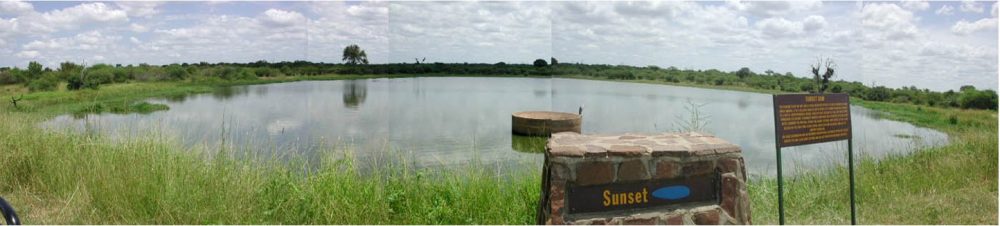
During summer the dam remained clear of water lettuce as the biological control had controlled the plants. After six years of fluctuating between the surface being covered and clear, the dam has remained free of water lettuce.
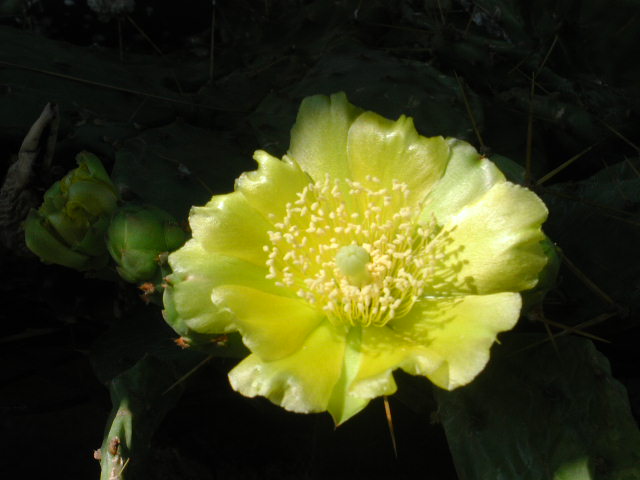
After being introduced as an ornamental plant, the sour prickly pear (Opuntia stricta) spread to cover thousands of hectares around Skukuza.

A large sour prickly pear plant near Skukuza.
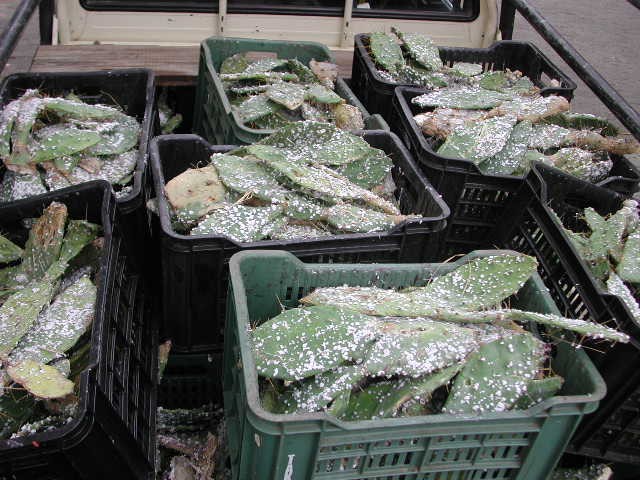
The cochineal has been reared in a facility in Skukuza and transferred into the field, where it is released into the invaded areas.
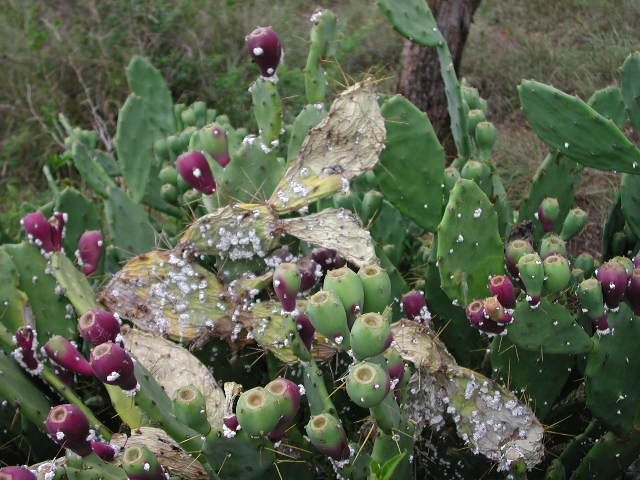
Cochineal being released onto sour prickly pear.
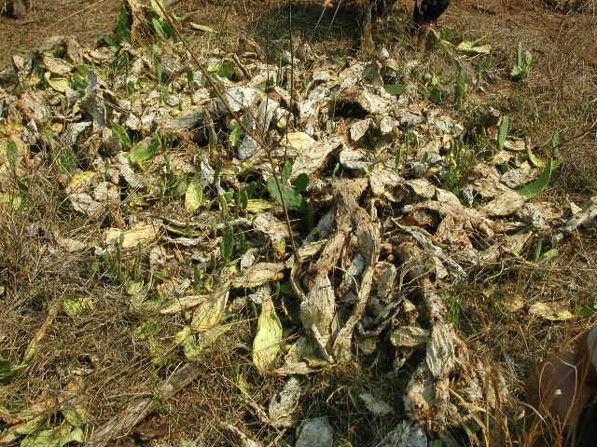
Successful control of sour prickly pear using the cochineal provides a long-term management option and continues to be the primary method for controlling sour prickly pear in the Kruger National Park.
