Human practices promote presence and abundance of disease transmitting mosquito species
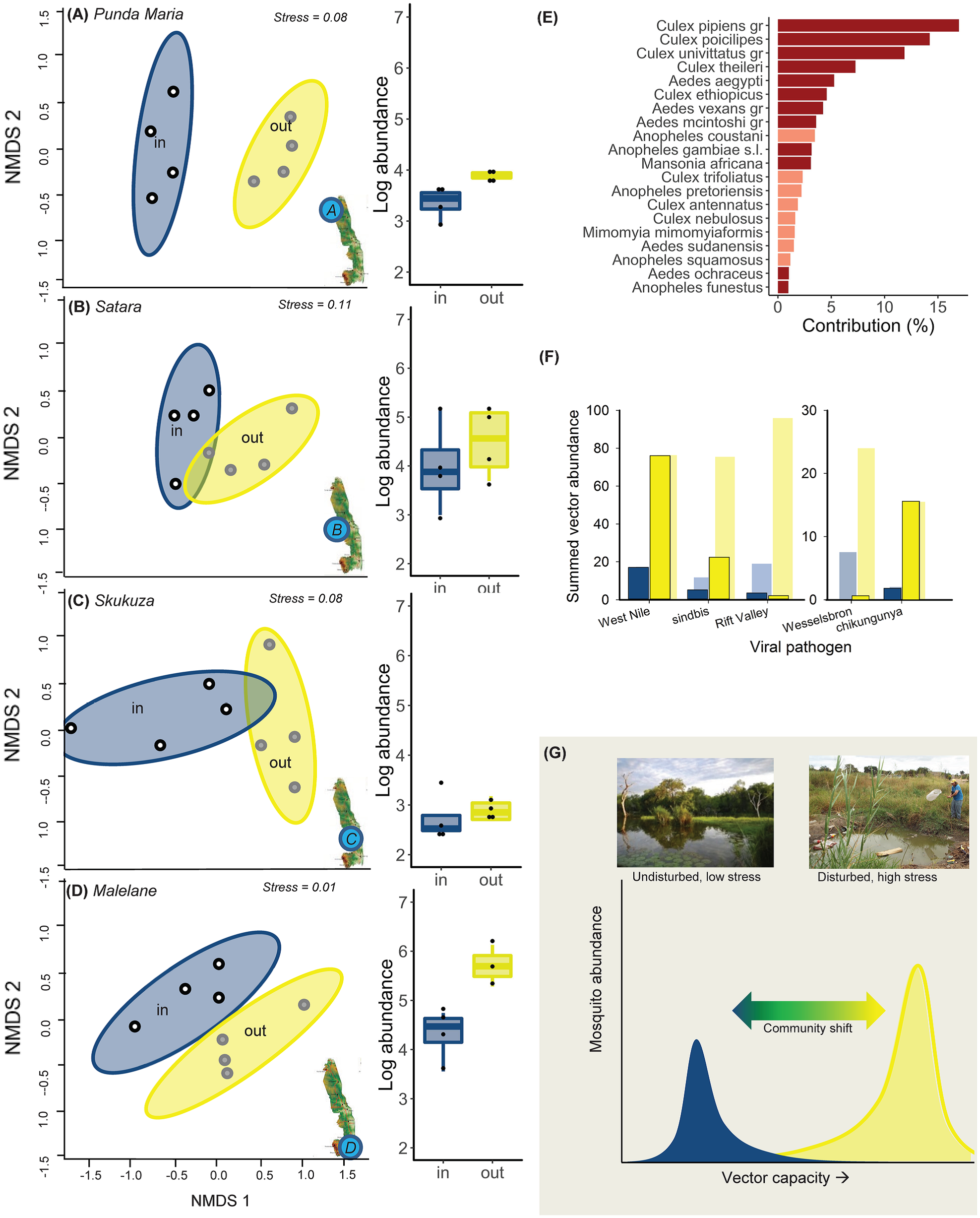
With the emergence of the novel Corona Virus 2 (SARS- CoV2), many conservationists and scientists have purported that human transformation of landscapes, allows for zoonotic disease to emerge. However, there are only a few papers with empirical evidence to support the idea, and go on to propose potential mechanisms or offer risk mitigation options; suffice to say that just excluding people from these “natural landscapes” is often not practical. By sampling along a large geographical gradient along the length of Kruger, both inside and outside the park, we show that landscapes disturbed by a variety of anthropogenic stressors are consistently associated with vector-dominated mosquito communities for a wide range of human and livestock infections.
This strongly suggests that human alterations to the environment promote the presence and abundance of disease vectors across large spatial extents. As such, it warrants further studies aimed at unravelling mechanisms underlying vector prevalence in mosquito communities, and opens up new opportunities for preventative action and predictive modelling of vector borne disease risks in relation to degradation of natural ecosystems.
DOI: https://doi.org/10.1038/s41598-020-69858-3