GRIN 2025 – a safe space for sharing insights, ideas and uncertainties about human-nature connections in conservation
SANParks co-hosted the successful 7th Garden Route Interface and Networking (GRIN) meeting, from 30 September to 2 October 2025, at Villa Castollini near Brenton-on-Sea in the Garden Route. GRIN provides a practice-oriented space for practitioners, scientists and students to co-learn about human-nature connections in conservation. This year, 85 participants contributed to more than 50 stimulating presentations and five hours of rich dialogue. Topics included human-nature connections; SANParks’ Vision 2040 & Mega Living Landscapes; conflicting value systems in society; building cross-cultural understanding; the value of education, stories and learning organisations; monitoring for compliance and reflection; and pathways for building social-ecological resilience.
SANParks co-hosts GRIN in collaboration with the REHABS International Research Laboratory (a partnership initiative between the French CNRS and Nelson Mandela University), the Southern African Programme on Ecosystem Change and Society (SAPECS), and the Society for Social Ecological Systems (SocSES).
A defining feature of GRIN 2025 was the strong engagement of conservation practitioners—notably managers from SANParks, Ezemvelo KZN Wildlife and CapeNature—who enriched the discussions with their valuable, practice-based insights and presentations. Further highlights were the opening keynote presentation from world-leading social-ecological systems scientist Prof Berta Martín-López, and an announcement that SANParks will become an Institutional Member of the newly founded Society for Social-Ecological Systems (SocSES).
Discussions emphasised the need to embed inclusivity and equitability at the heart of land- and sea-scape scale stewardship and conservation for positive human-nature outcomes. Contemporary challenges such as climate change, biodiversity loss, and land-use pressures require humble, innovative and participatory approaches that combine multiple forms of knowledge and knowing together with relationally embedded learning, monitoring and evaluation across stakeholders and institutions. Strong relationships and partnerships between practitioners, researchers and policymakers remain central to shaping both this meeting and sustainable futures.
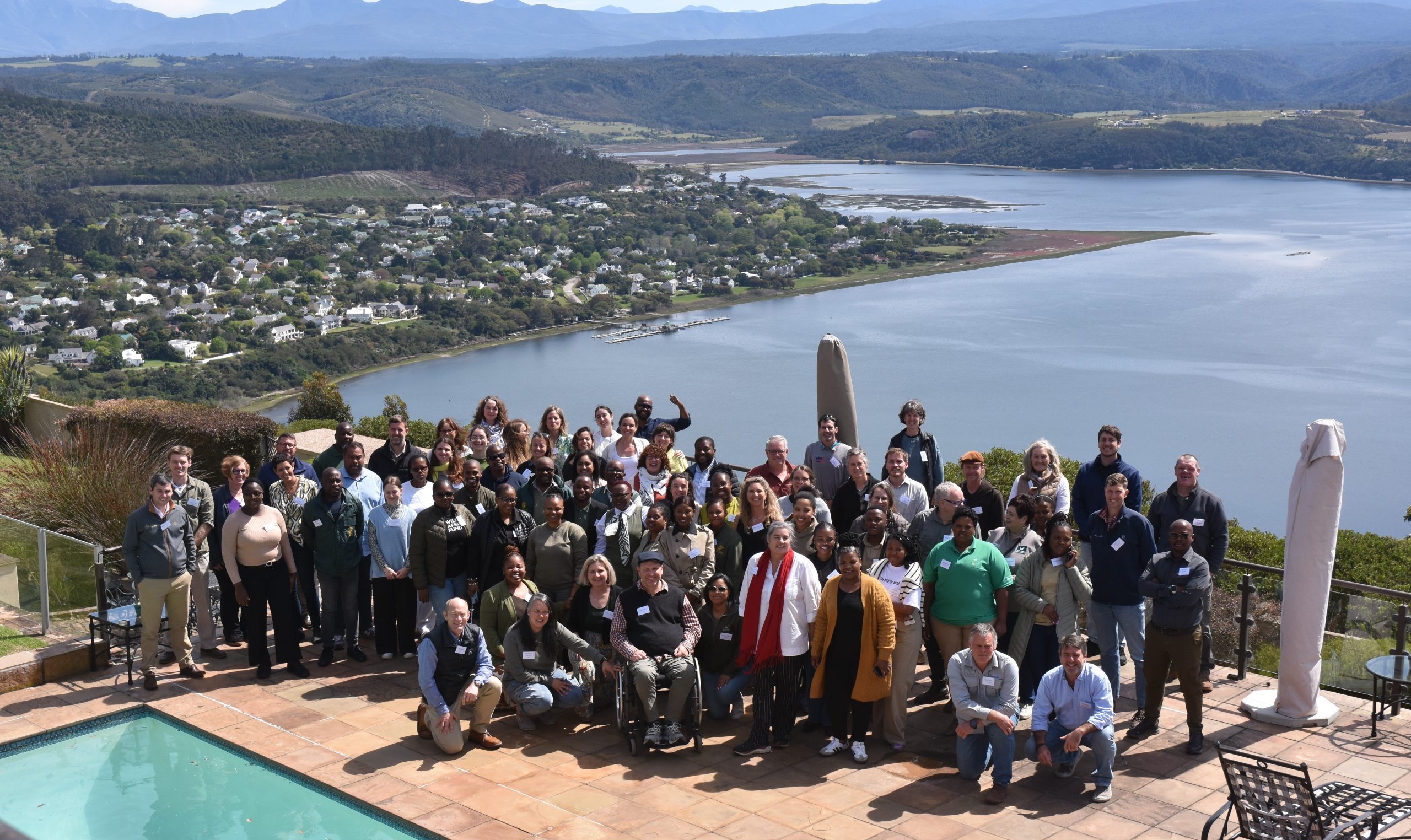
GRIN 2025 participants, with the Knysna Estuary as backdrop (Photo: Lindi Engelbrecht-Wilbraham).
Over the past seven years, GRIN has matured into a well-established community of practice. This was most evident in the lively and engaging discussion sessions as well as the freedom with which participants expressed themselves, e.g. using poetry and drama to complement their presentations. Several participants referred to GRIN as a ‘safe space’ where they can interweave their personal stories and uncertainties with their work experiences. A future challenge might well be to protect the intimacy of a relatively small gathering (<100 participants with a high proportion of repeat attendees) while welcoming newcomers and facilitating knowledge exchange with a growing network of South African and international co-learners.
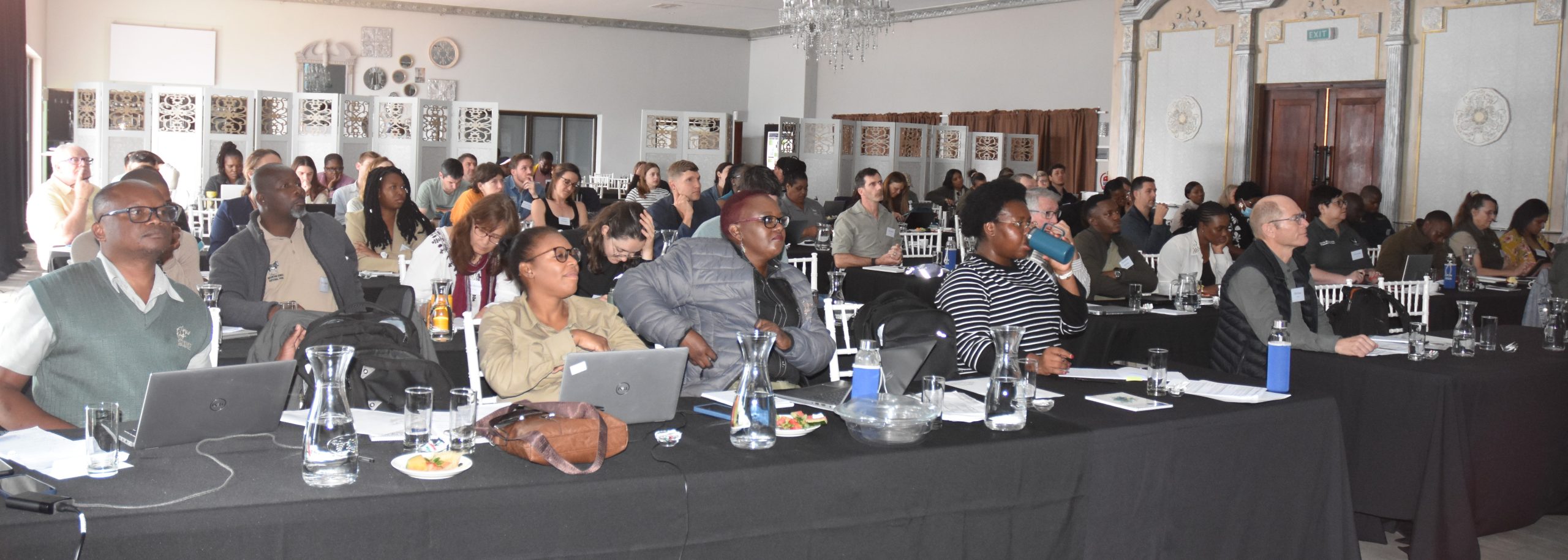
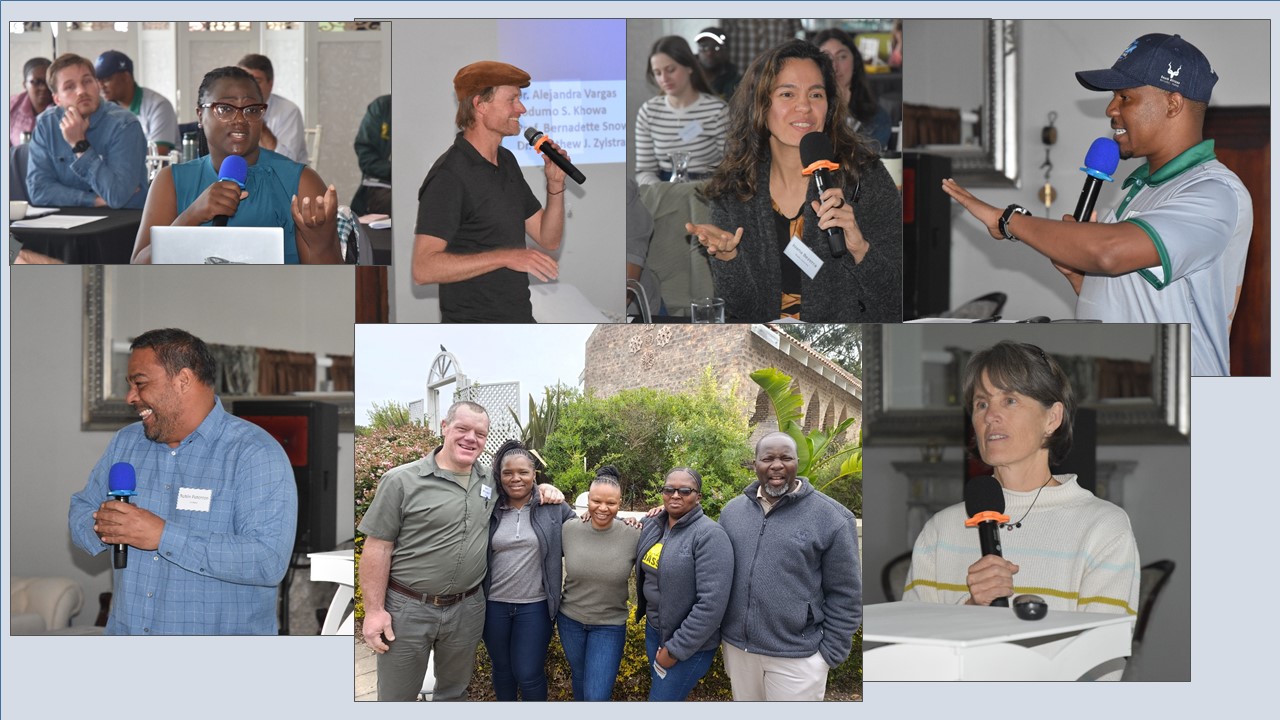
Moments from GRIN 2025.


