Black Rhino Monitoring in Frontier Parks
Diverse approaches are used to monitor black rhinos in the frontier national parks. Dedicated capacity and funding for intense monitoring have resulted in an innovative new financing mechanism for conservation outcomes.
The threatened south-western black rhino (Diceros bicornis bicornis) occurs in four South African National Parks of which three are in the Frontier Region – Addo Elephant (AENP), Karoo (KrNP) and Mountain Zebra (MZNP) National Parks. AENP has the only south-western black rhino population outside Namibia that is categorised as Key 1 population. Categorisation is done by the African Rhino Specialist Group and a Key 1 rhino population is one that is increasing or stable, has >100 rhino and/or conserves over 50% of a subspecies. Altogether, the frontier park populations are doing very well, persistently growing over the past ten years. However, with a growing population comes a growing need for good population monitoring to aid in the species’ biological and security management.
Black rhino monitoring in the Frontier Region was given a boost through grant funding from the Rhino Impact Bond (RIB) initiative for AENP and an IUCN Save Our Species (IUCN-SOS; co-funded by the European Union) Covid-19 relief grant. Black rhino prefered habitat often includes challenging terrain and dense vegetation. Thus, monitoring method choice depends on a specific parks’ terrain, vegetation and accessibility, and includes surveillance by air and camera traps, as well as foot and vehicle patrols. The RIB funding has enabled employment of two dedicated rhino monitoring technicians in AENP while IUCN-SOS funding has enabled foot patrols, camera trap deployment and maintenance and aerial surveillance in all three parks. With the Wilderness Foundation Africa providing vehicle and aerial support.

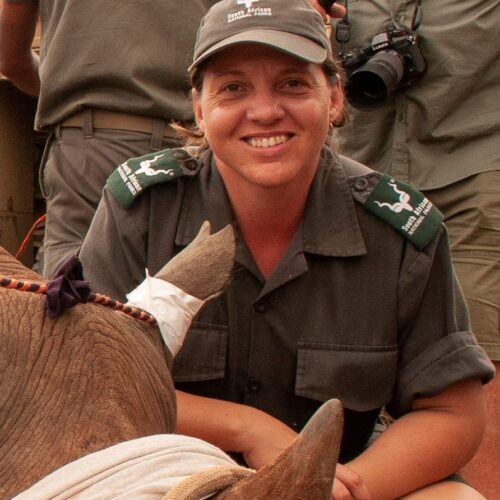
Ground and aerial monitoring operations, including ear-notching, is made possible by support from Wilderness Foundation Africa and an IUCN-Save our Species grant. Ear notching operations require high levels of professionalism, experience and collaboration as a team.
Altogether, 35 fixed-winged aerial survey flights, 40 new camera traps and ongoing camera trap maintenance was funded during the past nine months. Furthermore, financial support has enabled ear notching of calves across all three parks before separation from their mothers at around 18-20 months of age, which ensures that rhinos are individually recognizable. Frequent identification and re-sighting of individual rhinos enables confirmation of the well-being of the population and evaluation of the desired annual growth rate of at least 5%.
Ultimately, increased flights with the aim of monitoring have also aided security initiatives, which not only provide vital information about the rhino populations but also demonstrate increased alertness. Although no rhino have been poached in these three parks, the aim of regularly sighting each individual ensures the detection of injuries or mortalities and promotes timely intervention. Persistent monitoring has aided in the issuance of a Wildlife Conservation Bond (WCB). The five-year $150 million WCB is an instrument that mobilises private capital to finance black rhino conservation in two protected areas in South Africa, namely AENP and Great Fish River Nature Reserve. Conservation investment payments are made by the bond issuer to finance conservation activities while success is measured by rhino population growth rate (independently calculated by Conservation Alpha and verified by Zoological Society of London). Investors receive a success payment at maturity, paid by the International Bank for Reconstruction and Development and a performance payment from the Global Environment Facility, in addition to principal redemption of the bond. Credit Suisse is the sole structurer and joint bookrunner with Citibank. This is an innovative new approach to financing conservation.
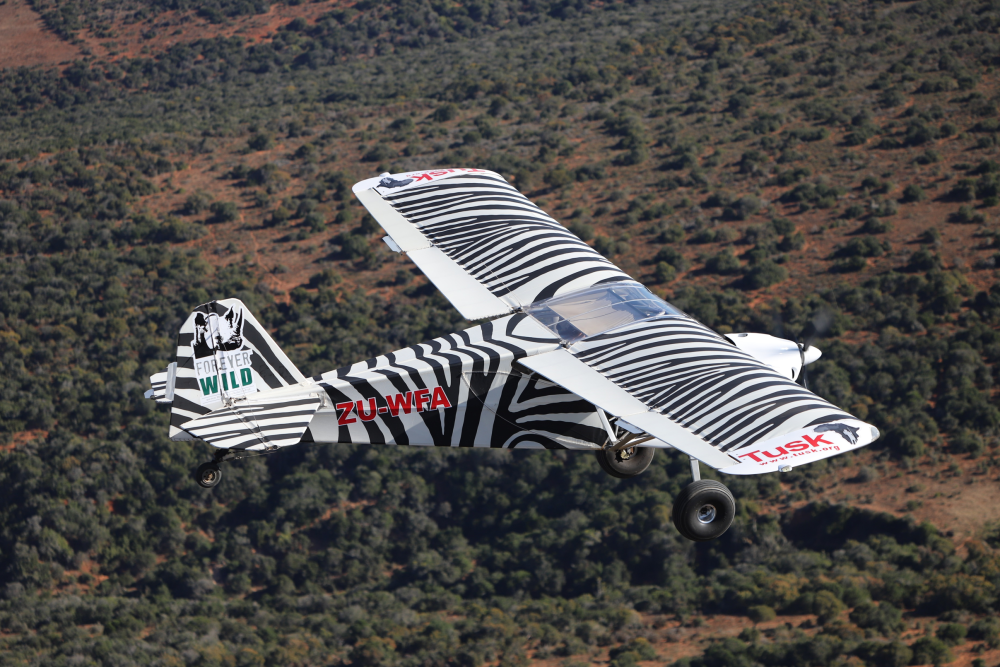
Ongoing aerial surveillance provides an invaluable contribution to black rhino monitoring, which is made possible through collaboration with Wilderness Foundation Africa and SANParks’ air support. Early calf detection of the critically endangered south-western black rhino (Diceros bicornis bicornis) is important for tracking the performance of this population.
Photos By: Ray Chaplin, Catherine Dreyer, Dr Charlene Bissett and Ester van der Merwe.
This article was written by Charlene Bissett, Stefanie Freitag-Ronaldson, Ester van der Merwe, Christiaan Lochner and Andre Riley and originally published in the 2021/2022 Research Report.