Addo Elephant National Park Black Rhino DNA Project
Reintroduced populations of black rhino are mainly descendents of small groups of founder individuals. Without adequate supplementation of genetic diversity through the timely introduction of unrelated individuals, these populations are at risk of inbreeding and genetic drift which may impact their long term viability.
The majority of black rhino populations within South Africa are small and fragmented and as a result, susceptible to reduced genetic diversity. The south-western black rhinos found in Addo Elephant National Park (AENP) form one of these populations. AENP’s current rhinos are mainly descendants of about 22 original individuals, split among three populations found in separately fenced sections (Main Camp, Darlington and Nyathi) within AENP. Some time later, Main Camp and Darlington were supplemented with additional unrelated individuals. Because reduced genetic diversity can lead to problems such as inbreeding and genetic drift, which may result in decreased fitness of offspring, understanding the genetics of the rhino population within AENP is important for effective management. With the financial help of The International Rhino Keepers Association, Stop Rhino Poaching, and Wilderness Foundation Africa, 165 genetic samples of rhino DNA were analysed.
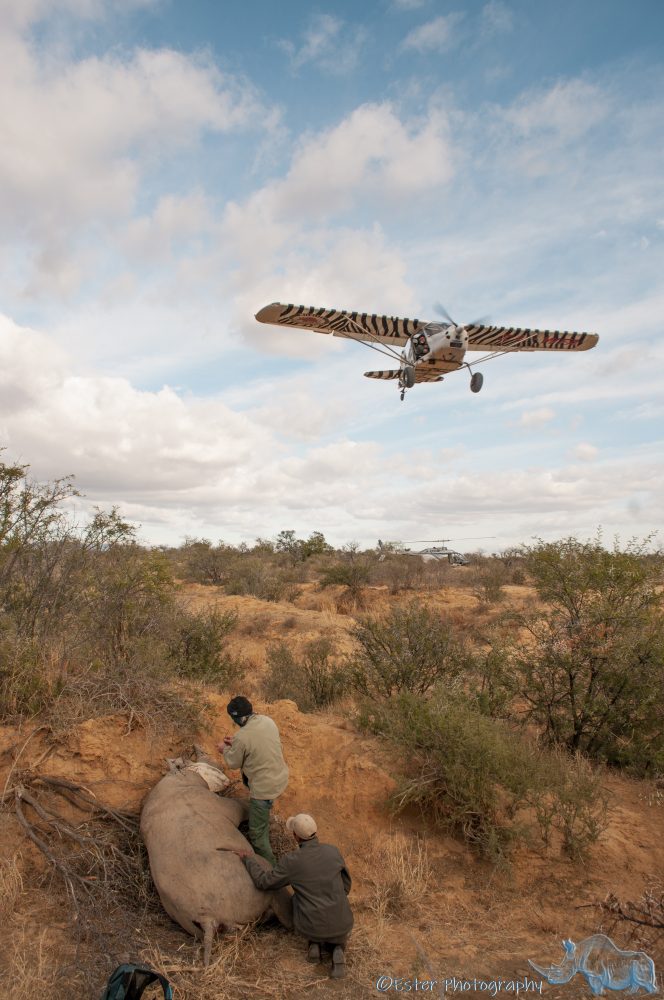
SANParks colleagues, David Zimmerman and Catherine Dreyer, ear notch a black rhino calf in AENP, to aid in visually identifying individual rhino (Photo: Ester van der Merwe).
Work done
The samples analysed were those available for AENP by mid-2020 in the SANParks Veterinary and Wildlife Services Biobank. The majority were collected during ear-notching operations. Samples were sent to ZooOmics™ for PCR amplification, sequencing, and genetic profiling. With the assistance of a geneticist, the genetic profiles were examined to link individuals based on maternal and paternal lineages, which also indicated levels of relatedness and inbreeding in the population.
Through the confirmation of maternal lineage, we could match independently-notched young individuals to mothers.. Clarity regarding the origin of these individuals provides substantial assistance with estimating the populations’ growth performance, because it provides information on how many calves a specific female had in a specific time period. . Similar levels of genetic diversity were observed across all three subpopulations of AENP. Although relatedness is low in the Darlington and Main Camp populations, it is high in Nyathi.
Future work
In order to test to what degree descendents are related to the rhino that founded the population, the genetic profiles of the founders are important. For some of these, no samples are available, and we are in the process of collecting tissue samples from those individuals that are still alive. An additional 43 samples have also been collected since the initial analyses and will be analysed to ensure our database stays up to date. More importantly, the findings of the study to date have allowed us to make recommendations. Some of these recommendations include the importance of ensuring a genetically diverse founding population for the Kabouga section and the timely addition of unrelated individuals into the Nyathi population.
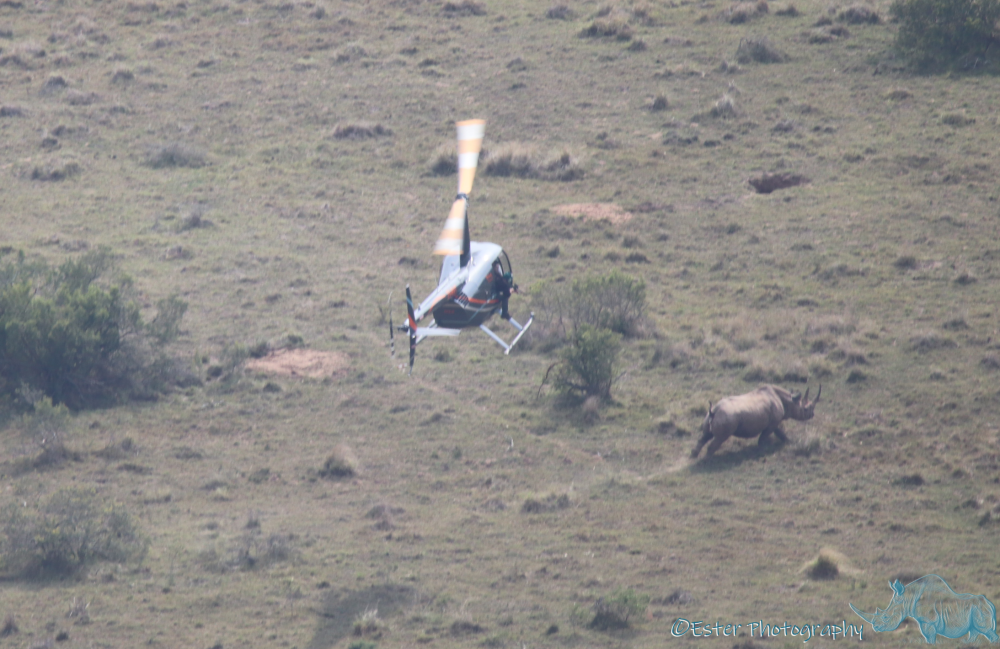
A founding father of the AENP South western black rhino population is darted with a special biopsy dart to collect DNA (Photo: Ester van der Merwe).
This article was written by Christiaan Lochner, Catherine Dreyer and David Zimmerman and originally published in the 2021/2022 Research Report.